
Holding Hope: Faith Communities and Mental Health
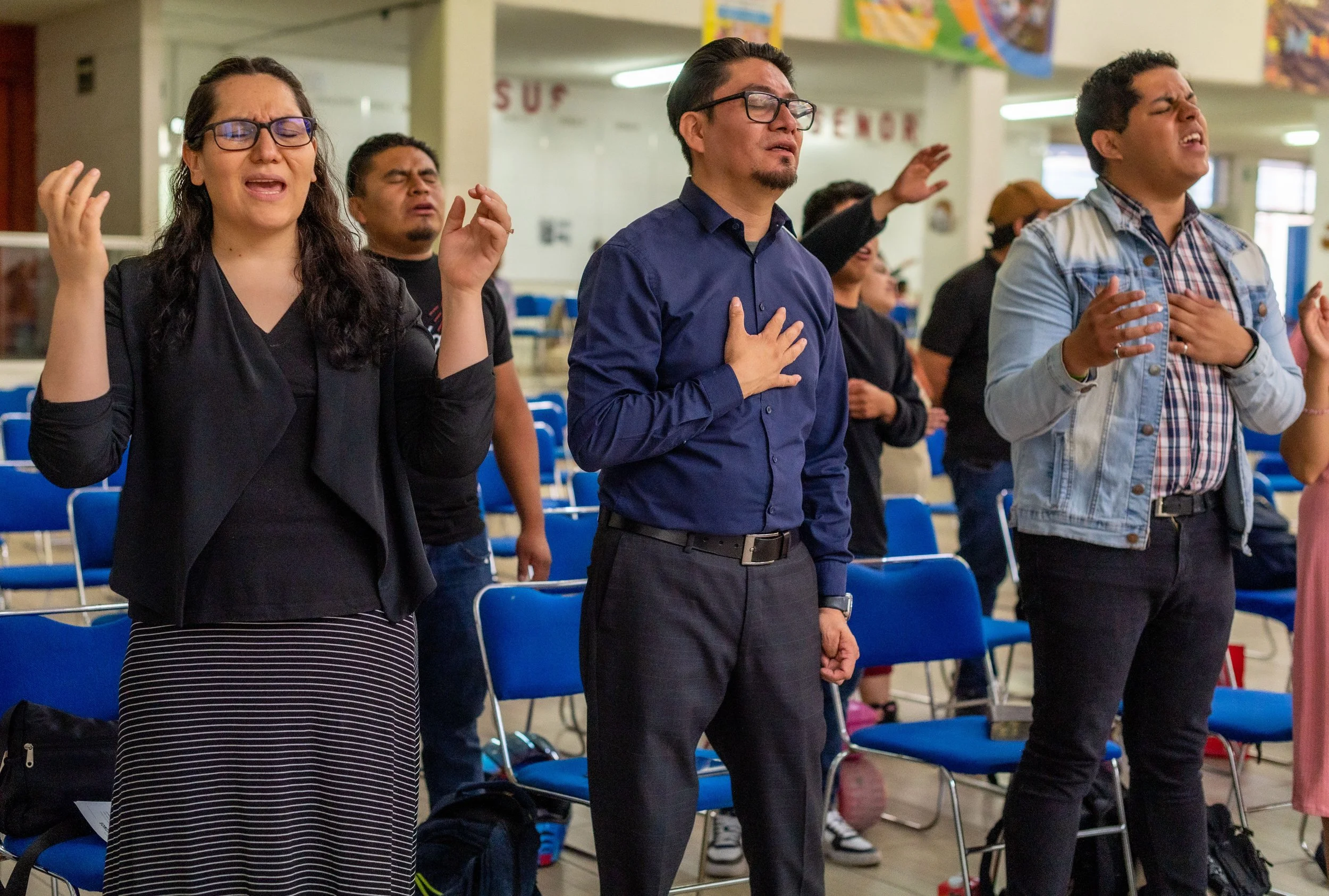
Somewhere in Riverside this week, someone will sit through a service feeling entirely alone in a room full of people who care about them. They will sing, or pray, or stand and sit at the right moments, and they will leave without saying the thing they came in carrying. This happens in churches and synagogues, in mosques and temples and gurdwaras, in small storefront fellowships on Magnolia Avenue and in large congregations in Corona. It happens not because these communities are cold, but because most of them have never been given a clear way to make room for despair.
September is Suicide Prevention Awareness Month, and faith communities occupy an unusual position in that conversation. They are often the first place a struggling person shows up, sometimes long before a clinician's office. That access is a genuine gift, and it carries responsibility with it. This piece looks at what these communities already do well, where good intentions go sideways, and the real difference between spiritual support and professional mental health care.
What Faith Communities Already Do Well
It is worth starting with what is already working, because the strengths here are not small. Faith communities provide something that is genuinely difficult to obtain elsewhere: regular, unearned, non-transactional belonging. You do not have to be interesting or productive to be expected on a Friday night or a Sunday morning. For someone whose sense of worth has collapsed, being missed when absent is not a minor intervention.
These communities are also unusually comfortable with mortality, meaning, and suffering, which most of the rest of contemporary life is not. Grief has a shape in a faith community. There are words for it, meals that arrive, rituals that carry people through the days when they cannot organize themselves. That is one reason spiritual perspectives on grief often reach people that clinical language does not.
And they persist. Therapy is time-limited by design; a congregation is not. Faith communities can hold a decade-long relationship with someone, notice slow changes, and remain present after the casseroles stop coming. Our discussion of integrating spirituality and mental health care starts from this premise: these are complementary strengths, not competing ones.
Where Good Intentions Go Sideways
The failures in this area are rarely failures of love. They are almost always failures of framework, where people who genuinely want to help reach for the only tools they were given. Naming the common ones is not an indictment of anybody's faith.
Spiritualizing a Clinical Problem
When persistent depression is met only with encouragement to pray more, believe harder, or examine unconfessed sin, the person hears something specific: this is your spiritual failure. Someone already convinced they are the problem now has religious confirmation. Faith and treatment are not alternatives, and our overview of faith-based approaches to anxiety and depression treats them as partners.
Treating Doubt and Despair as Disloyalty
In many traditions, hope is a virtue, which can make hopelessness feel like a betrayal of the community. So people perform wellness. They say they are blessed. Meanwhile the sacred texts of nearly every tradition are full of lament, of people naming anguish out loud in the presence of the holy. Communities that recover that permission become substantially safer places.
Confidentiality Without Any Structure
Prayer chains and small groups are powerful, and they also move information fast. If someone's disclosure becomes general knowledge by Wednesday, that person will not disclose again, and neither will anyone watching. Clear, stated norms about what stays private are not a lack of trust. They are what makes trust possible.
Advice Where Presence Was Needed
The impulse to fix is universal and, in these settings, often theologically dressed. But most people in acute distress do not need an explanation of their suffering. They need someone to sit in it without rushing them out. Our piece on supporting a loved one after trauma covers what that presence looks like in practice.
None of these require a change in belief to correct. They require a change in habit.
Where Spiritual Support Ends and Clinical Care Begins
The most useful frame is not either-or. Spiritual care and clinical care answer different questions, and confusing them shortchanges both.
Spiritual care addresses meaning, belonging, moral injury, forgiveness, and a person's relationship to something larger than themselves. It offers community, ritual, and continuity. Clinical care addresses diagnosis, risk assessment, symptom treatment, medication questions when relevant, trauma processing, and structured skills, delivered under confidentiality and professional accountability. A therapist should not be trying to resolve your theology. A faith leader should not be assessing suicide risk alone.
Held together, they do something neither does alone. Practices like prayer and meditation as complements to mental wellness can sit comfortably alongside treatment. And for many families, faith is not incidental to care but central to it, which is much of what culturally responsive therapy means in practice. In our region, where faith and family are deeply intertwined for many Latino households, a clinician who dismisses a client's tradition is not being neutral. They are being less effective.
Five Practical Steps for Faith Leaders and Members
None of this requires becoming a mental health professional. It requires a handful of concrete habits, most of which cost nothing.
1. Say the Words From the Front
Most congregants have no idea whether their community considers therapy acceptable. Saying so plainly, in a sermon, a bulletin, a newsletter, or a khutbah, removes an enormous barrier. Naming your own use of counseling, if that is true and you are comfortable, does more than any program. Silence gets read as disapproval.
2. Know Your Limits Before You Are Tested
Decide in advance what you handle and what you refer, and write it down. A reasonable line: you offer presence, prayer, and practical support indefinitely; you refer when there is risk to life, when symptoms persist for weeks, when substance use is involved, when trauma is central, or when you are out of your depth. Deciding this on a Tuesday afternoon is much easier than deciding it during a crisis.
3. Build a Referral List Before You Need One
Keep an actual list: local therapists, including any who work with your tradition and language, your county's behavioral health access line, local crisis services, and nearby emergency departments. Verify it once a year, because these things change. Handing someone a real name is a different act from telling them to look into counseling.
4. Train the People Who Are Actually There
Clergy are not usually the first to notice. Ushers, youth workers, small group leaders, and choir members are. A short training on noticing warning signs, asking directly, and passing concerns to the right person turns a whole community into something more attentive. Keep it simple and repeat it annually.
5. Look After Your Own Leaders
Faith leaders absorb an extraordinary amount of grief with very little supervision and few boundaries, and they are frequently the last to seek help because they are supposed to be the helpers. Congregations should expect their leaders to have their own therapist, their own days off, and their own limits. Our piece on preventing burnout in helping professions applies here directly.
Start with one of these. A single sentence from the front, or one accurate referral list, changes more than a committee.
When It Is a Crisis
Every faith leader should know these steps cold, before the phone call comes at eleven at night.
If someone is in immediate danger, call 911 or go with them to the nearest emergency department. If there are thoughts of suicide but not immediate danger, the 988 Suicide & Crisis Lifeline is available by call or text at any hour, and it is there for the person supporting someone too. Stay with the person while help is arranged. Do not leave them alone to make the call themselves, and do not treat prayer and professional help as an either-or in that moment.
It also matters what you do not promise. Do not promise to keep a life-threatening disclosure secret. Do not promise a particular outcome or timeline; healing does not run on a schedule, and nobody can guarantee otherwise. And do not promise that faith alone will resolve it, because if it does not, the person may conclude that they have failed at the one thing they had left. Know your county's behavioral health crisis line and local crisis services, and keep those numbers where you can find them without thinking.
Holding Hope Without Holding It Alone
The phrase holding hope is worth taking literally. When someone cannot access hope themselves, a community can hold it for them, the way you hold a coat for someone whose arms are full. That is not the same as insisting they feel it. It means the belief that their life has worth continues to exist somewhere, out loud, in a room they are welcome in, until they can pick it up again. Faith communities are unusually well-suited to that job.
What they cannot do is the whole job, and the healthiest ones know it. The congregation that keeps a therapist's number in the office drawer is not a congregation with weak faith. It is one that takes suffering seriously enough to want every available help. If your community in Riverside, Corona, or anywhere in the Inland Empire is looking to build that kind of bridge, or if you are a member quietly wondering whether it is acceptable to seek support, you are welcome to learn about who we are and how we work. We work with clients across many traditions, including affirming care for LGBTQ clients and couples, families navigating beliefs across generations, and anyone still looking for a place of peace in this valley. Hope is easier to hold together.
Ready to take the next step in your mental health journey? At Raincross Family Counseling, we're here to support you with compassionate, personalized care in the heart of the Inland Empire and beyond. Whether you're seeking individual therapy, couples counseling, family therapy, or specialized EMDR treatment, our experienced team is ready to walk alongside you toward healing and growth. Contact us today!
Raincross Family Counseling - Where healing takes root and growth flourishes in our Riverside community.
